


Comparing Self-Disinfecting Coatings to Traditional Disinfectants
April 2, 2024
Preventing Hospital-Acquired Infections with Regular Disinfection
April 12, 2024Frequency of Disinfection: Best Practices for Various Settings

Frequency of Disinfection Best Practices for Various Settings
Frequency of Disinfection: Best Practices for Various Settings. In our ongoing battle against the spread of infectious diseases, the practice of regular disinfection emerges as a cornerstone of public health and safety across various environments.
This comprehensive guide explores the essential best practices for determining the optimal frequency of disinfection to mitigate the risk of germ and pathogen proliferation, tailored to the unique needs of diverse settings.
The imperative for regular disinfection has never been more critical, given the heightened awareness of how easily infectious diseases can spread within communal and private settings.
This article seeks to delineate best practices for the frequency of disinfection, aiming to arm facility managers, health professionals, educators, and the general public with actionable insights to maintain hygienic environments conducive to health and wellbeing.
Factors Influencing Disinfection Frequency
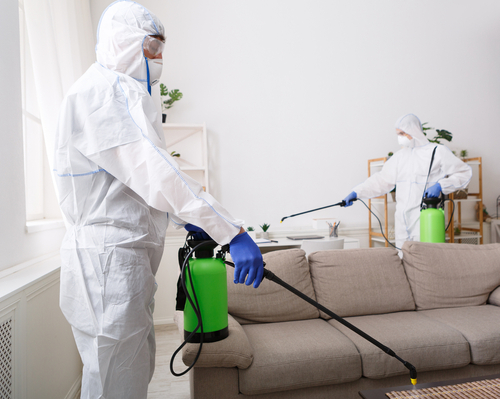
Type of Setting
The nature of the setting plays a pivotal role in determining the need for and frequency of disinfection protocols.
Healthcare Facilities
Healthcare settings, including hospitals and clinics, are high-risk environments requiring the most stringent disinfection routines due to their direct involvement with illnesses and the vulnerability of their populations.
Schools and Educational Institutions
Schools, with their high-density occupancy and the youth of their populations, often require daily disinfection protocols to prevent the spread of common illnesses.
Offices and Workplaces
While generally considered to be of moderate risk, offices and workplaces must adapt their disinfection frequency to the volume of employee interaction and shared spaces.
Public Spaces
Public spaces such as parks, transit stations, and shopping malls encounter a vast cross-section of the public, necessitating regular disinfection of high-touch surfaces to prevent widespread community transmission.
Level of Risk
The level of risk associated with a particular setting significantly influences the frequency of required disinfection efforts.
High-Risk Areas
Areas within facilities that cater to or are accessed by individuals with higher susceptibility to infections demand more frequent and rigorous disinfection to mitigate potential outbreaks.
Time of Day
Adjusting disinfection schedules according to the time of day and peak usage periods can enhance the effectiveness of disinfection efforts, ensuring environments are sanitized at critical times.
Establishing Effective Disinfection Schedules
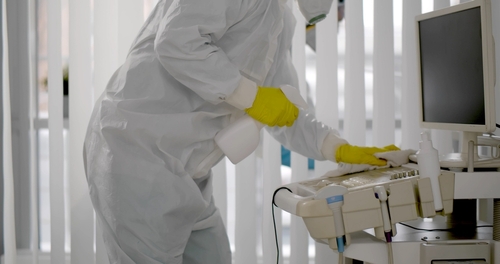
Regularity
Consistency is key in maintaining environments that are safe and hygienic. Establishing regular disinfection schedules tailored to the specific characteristics and usage patterns of each setting is essential.
Daily Disinfection
Daily disinfection should be considered a baseline for most settings, particularly for high-touch surfaces and communal areas.
Multiple Times Daily
In high-risk or high-traffic environments, disinfection may need to occur multiple times throughout the day to adequately protect against the spread of pathogens.
Flexibility
The ability to adapt disinfection schedules in response to emerging health threats or changes in usage patterns is crucial for maintaining optimal levels of hygiene and safety.
Adaptability
Facilities should have protocols in place to increase the frequency of disinfection in response to identified risks or outbreaks of infectious diseases.
Comprehensive Coverage
Ensuring that all areas, especially those that are frequently touched or used by multiple individuals, are included in disinfection schedules is vital for comprehensive infection control.
Prioritizing High-Touch Surfaces
Doorknobs, light switches, countertops, and other high-touch surfaces should be prioritized for frequent disinfection to reduce the risk of germ transmission.
Best Practices for Various Settings
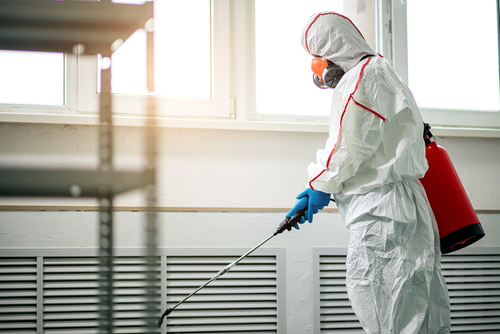
Healthcare Facilities
Given their direct impact on patient health, healthcare facilities require the highest level of diligence in disinfection practices, with some areas needing multiple disinfections per day.
Schools and Educational Institutions
Regular, thorough disinfection of classrooms, cafeterias, restrooms, and playground equipment is essential for safeguarding student health, particularly during flu season or in the event of a health alert.
Offices and Workplaces
To maintain a healthy working environment, offices should enforce daily disinfection of shared workspaces, meeting rooms, and common areas, with additional focus on shared equipment like printers and coffee machines.
Public Spaces
Managing public health in high-traffic public spaces involves regular disinfection of surfaces likely to be touched by the public, including handrails, elevator buttons, and restroom facilities.
FAQ: Disinfection Frequency and Best Practices
1. Can the use of disinfectants lead to antimicrobial resistance?
Yes, the misuse or overuse of disinfectants can contribute to the development of antimicrobial resistance (AMR).
To minimize this risk, it’s crucial to use disinfectants according to the manufacturer’s instructions and only when necessary.
Alternating between different types of disinfectants and employing mechanical cleaning methods can also help reduce the potential for resistance.
2. How should disinfection practices be adjusted during an outbreak of a contagious illness?
During an outbreak, disinfection practices should be intensified. This may involve increasing the frequency of disinfection, especially in high-risk and high-traffic areas, and expanding the range of surfaces and objects that are regularly disinfected.
It’s also essential to use products that are effective against the specific pathogens causing the outbreak, as recommended by health authorities.
3. Are natural or eco-friendly disinfectants as effective as chemical disinfectants?
Natural or eco-friendly disinfectants can be effective against certain pathogens, but their efficacy can vary widely.
When choosing disinfectants, it’s important to consider the specific pathogens you need to target and select a product that has been proven effective against those pathogens.
For healthcare and high-risk settings, EPA-registered disinfectants that meet the facility’s specific needs are generally recommended.
4. How can facilities ensure they are not over-disinfecting and causing unnecessary exposure to chemicals?
Facilities can prevent over-disinfection by establishing a disinfection schedule based on risk assessment, focusing on high-touch surfaces and areas with high traffic or risk of contamination.
Training staff on proper disinfection techniques and the safe use of disinfectants can also minimize unnecessary exposure.
Additionally, using no-touch disinfection technologies like UV-C light in appropriate settings can reduce chemical use.
5. What measures can individuals take to complement professional disinfection efforts in public spaces and workplaces?
Individuals can complement professional disinfection efforts by practicing good personal hygiene, including regular handwashing with soap and water and using hand sanitizer when soap and water are not available.
Maintaining physical distance from others, wearing masks in crowded or high-risk environments, and staying home when feeling unwell can also help reduce the spread of pathogens.
Additionally, individuals can wipe down personal workspaces and frequently touched objects with disinfectant wipes before use.
Frequency of Disinfection: Best Practices for Various Settings – Conclusion
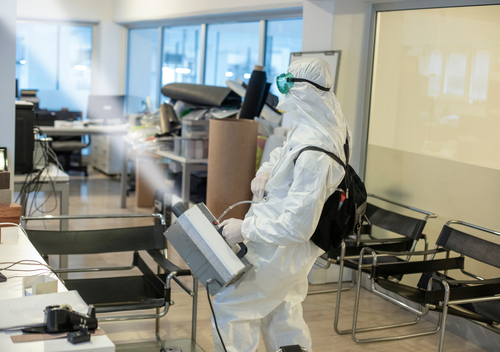
Determining the optimal frequency of disinfection across various settings is a nuanced process influenced by the type of setting, the inherent level of risk, and the specific patterns of use and occupancy.
By adhering to the outlined best practices and maintaining flexibility to adapt to changing circumstances, facilities can effectively mitigate the risk of pathogen transmission, thus contributing significantly to public health and safety.
As we continue to navigate the challenges posed by infectious diseases, the role of regular and effective disinfection practices remains indispensable in our collective efforts to maintain hygienic, safe, and healthy environments for all.
Are you seeking professional and reliable disinfection services in Singapore? Contact us today!


